 Image 1 of 1
The financial system is changing but the real opportunity may not be finding the next cryptocurrency to pump. It may be understanding the infrastructure being built underneath the future of money.
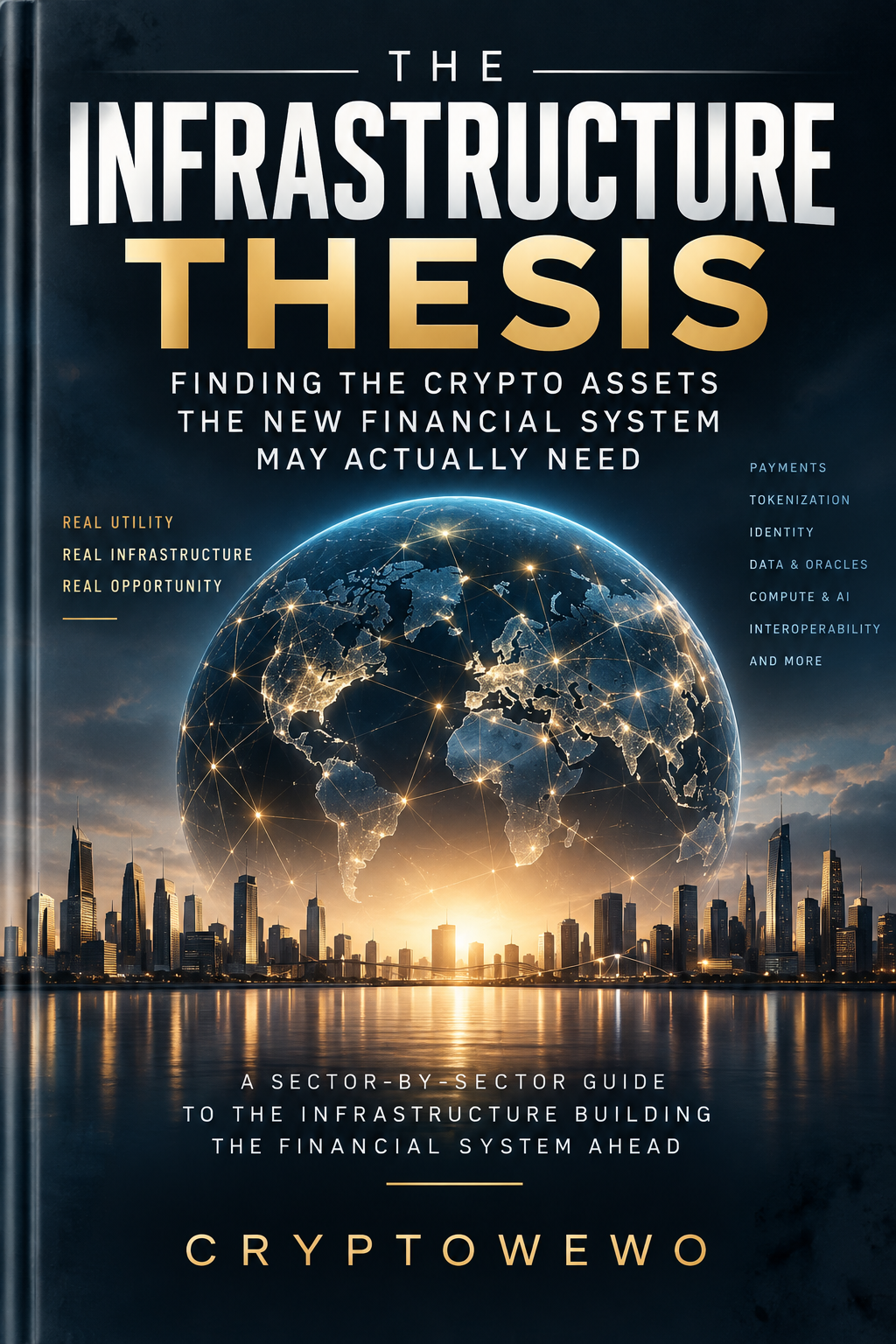
The Infrastructure Thesis takes a sector-by-sector look at the cryptocurrency projects competing to become part of an increasingly digital, tokenized, programmable, and interconnected financial system.
Instead of starting with a token and trying to justify why it should succeed, this book starts with a different question:
What will the financial system of the future actually need?
Payments and settlement. Interoperability. Oracles and data. Tokenization. DeFi. Artificial intelligence and decentralized computing. Identity and compliance. Trade finance. Storage. Smart-contract platforms. Liquidity and more.
From there, we examine the projects competing to provide that infrastructure and separate the narrative from the evidence.
Each project is evaluated beyond price predictions and partnership headlines. We look at real utility, technology, adoption, tokenomics, competition, institutional positioning, regulatory survivability, security, value capture, and one of the most important questions in crypto:
If the technology succeeds, does the token actually benefit?
The goal isn't to predict one cryptocurrency that will “replace the financial system.” It's to identify the critical infrastructure layers that may be needed, determine which projects are best positioned within them, and understand the risks that could cause those investment theses to fail.
Some assets may become core infrastructure. Some may offer asymmetric opportunities. Some may have incredible technology but weak token economics. And some projects that survived previous crypto cycles may not survive the next stage of the industry's evolution.
The Infrastructure Thesis is about following the infrastructure, following the evidence, and investing with your eyes wide open.
For educational purposes only. Nothing in this book constitutes financial or investment advice.
The financial system is changing but the real opportunity may not be finding the next cryptocurrency to pump. It may be understanding the infrastructure being built underneath the future of money.
The Infrastructure Thesis takes a sector-by-sector look at the cryptocurrency projects competing to become part of an increasingly digital, tokenized, programmable, and interconnected financial system.
Instead of starting with a token and trying to justify why it should succeed, this book starts with a different question:
What will the financial system of the future actually need?
Payments and settlement. Interoperability. Oracles and data. Tokenization. DeFi. Artificial intelligence and decentralized computing. Identity and compliance. Trade finance. Storage. Smart-contract platforms. Liquidity and more.
From there, we examine the projects competing to provide that infrastructure and separate the narrative from the evidence.
Each project is evaluated beyond price predictions and partnership headlines. We look at real utility, technology, adoption, tokenomics, competition, institutional positioning, regulatory survivability, security, value capture, and one of the most important questions in crypto:
If the technology succeeds, does the token actually benefit?
The goal isn't to predict one cryptocurrency that will “replace the financial system.” It's to identify the critical infrastructure layers that may be needed, determine which projects are best positioned within them, and understand the risks that could cause those investment theses to fail.
Some assets may become core infrastructure. Some may offer asymmetric opportunities. Some may have incredible technology but weak token economics. And some projects that survived previous crypto cycles may not survive the next stage of the industry's evolution.
The Infrastructure Thesis is about following the infrastructure, following the evidence, and investing with your eyes wide open.
For educational purposes only. Nothing in this book constitutes financial or investment advice.